Perfect Boiled Eggs
完美水煮蛋wán měi shuǐ zhǔ dàn
- Time
- 35 min
- Difficulty
- Easy
- Calories
- 86 kcal
- Yield
- 1 serving
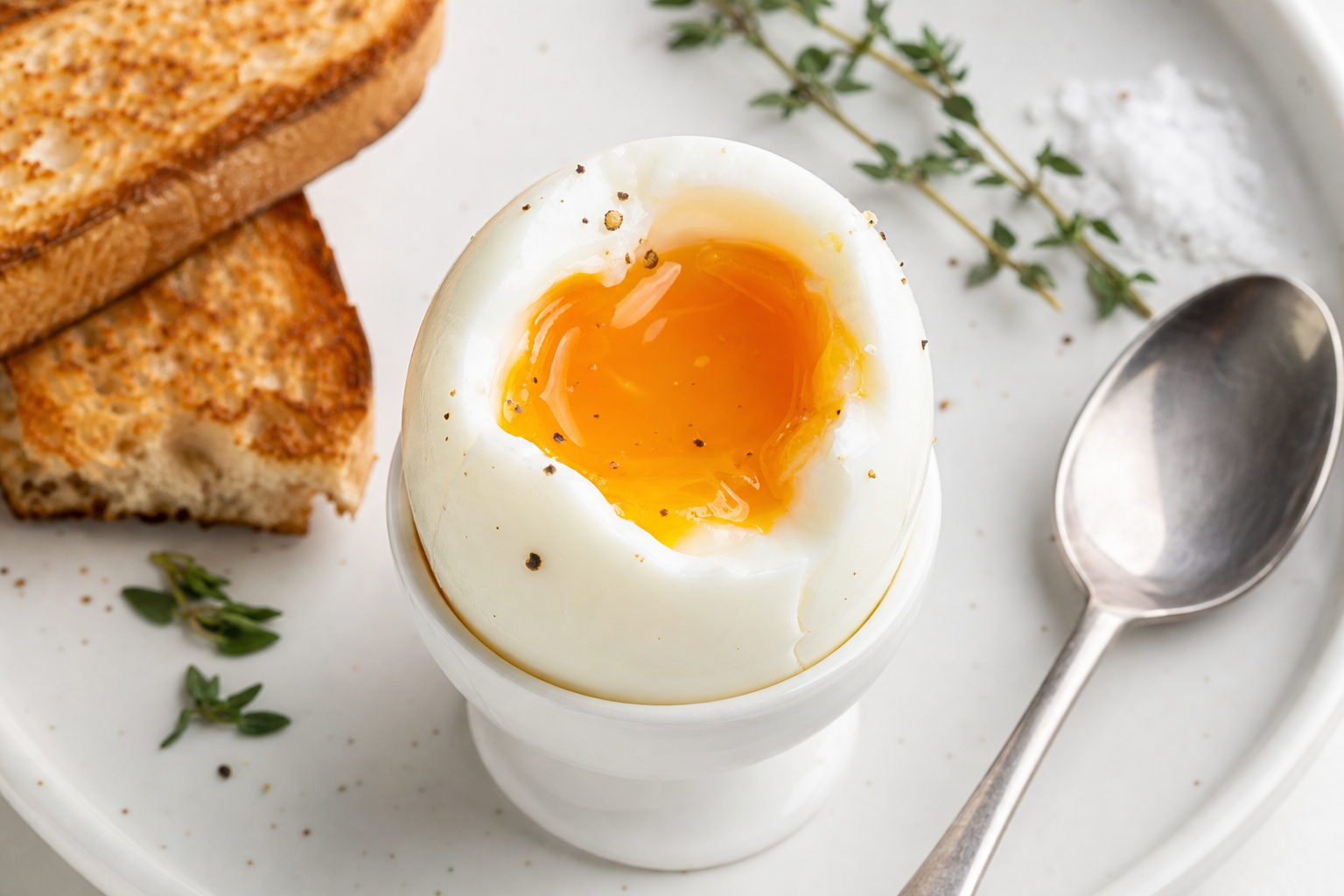
These eggs are made using a scientifically developed cyclic boiling method, resulting in a dense, silky yolk and evenly set white with distinct textural layers. This method retains more nutrients, with 23% higher polyphenol content than traditional boiling, and is rich in protein.这是一道通过科学家研发的循环水煮法制成的鸡蛋,蛋黄绵密细腻,蛋白均匀凝固,口感层次分明。它保留了更多营养素,多酚含量比传统煮法高 23%,蛋白质丰富。
At a glance
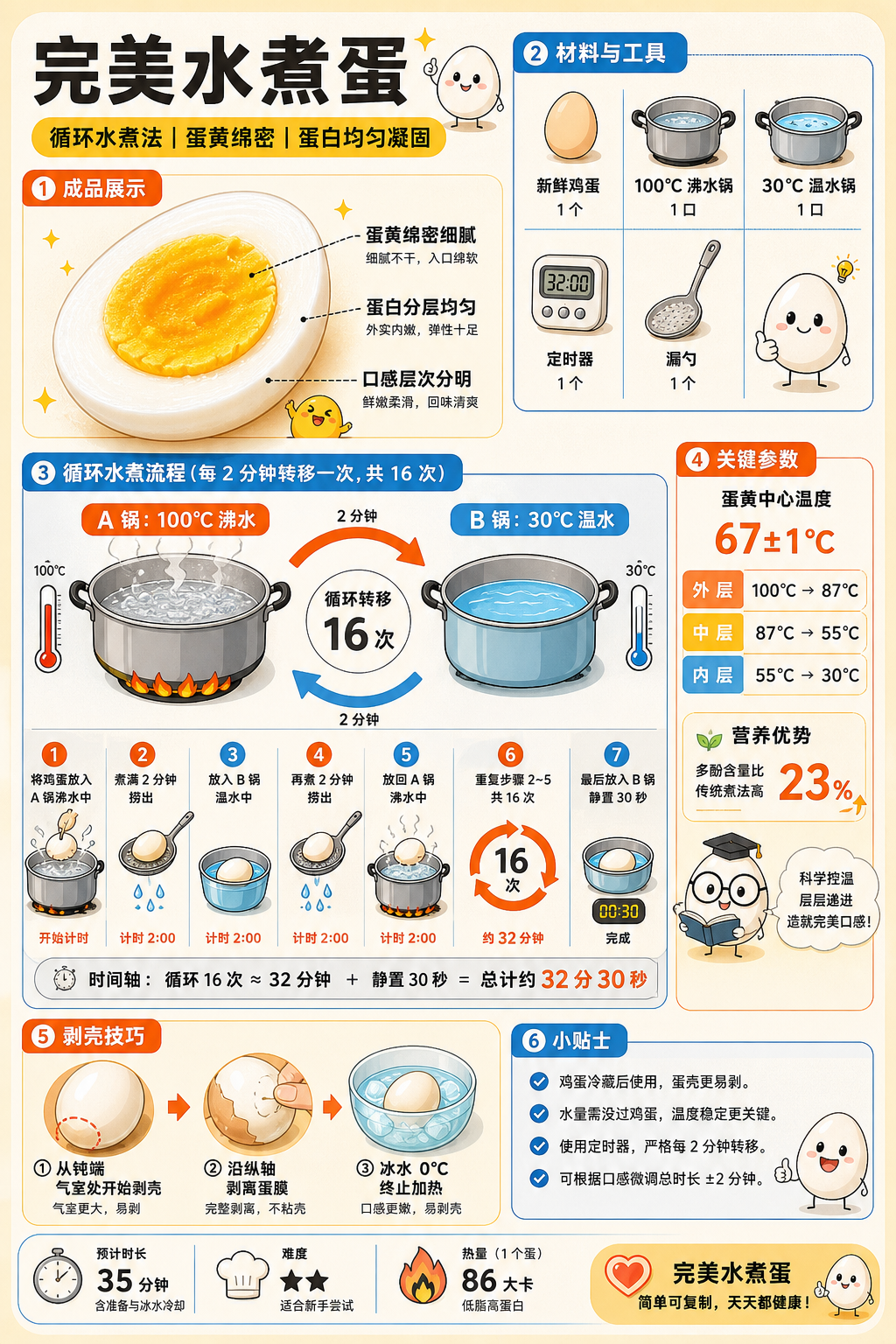
Every ingredient and step on one sheet — worth pinning before you start.
Method7 steps
- 1
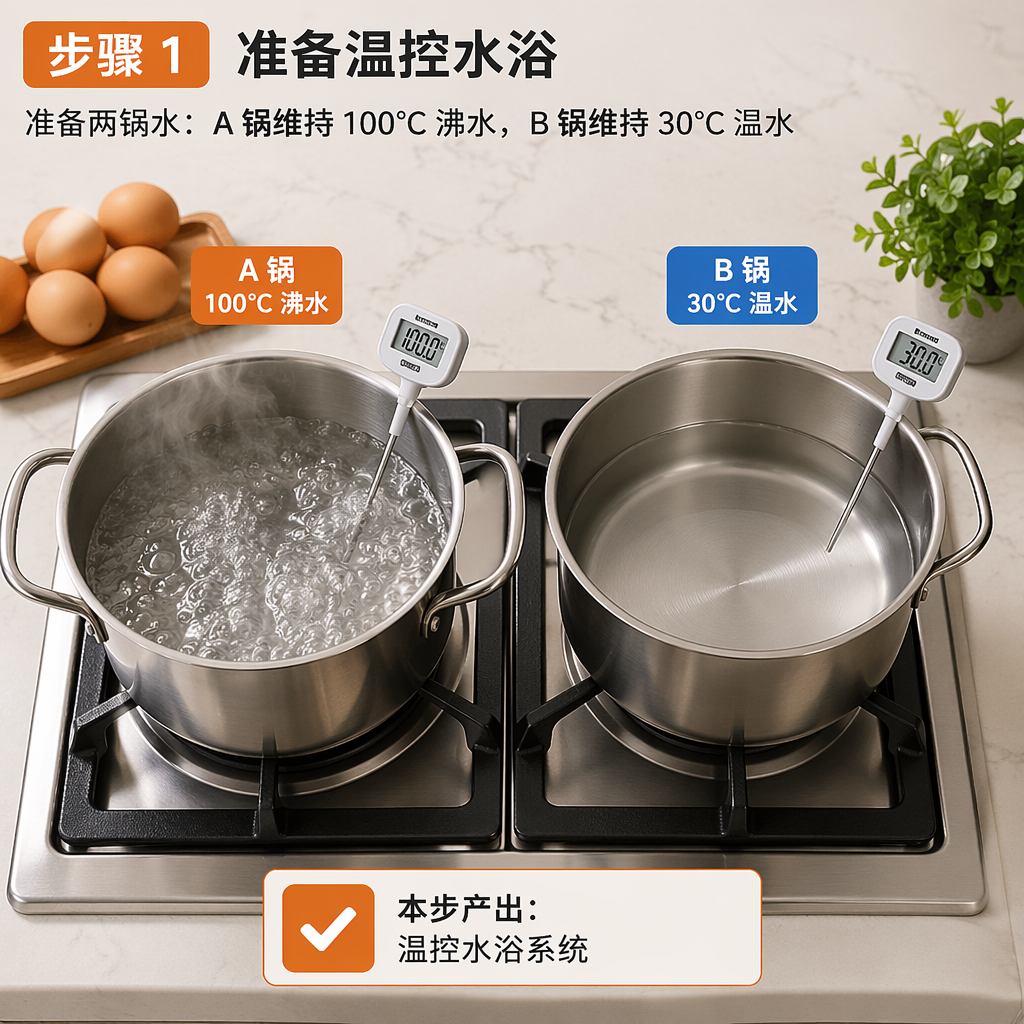
Prepare the Temperature-Controlled Water Baths
准备温控水浴
Prepare two pots of water: Pot A maintained at Boiling water (100°C), Pot B maintained at Warm water (30°C)
准备两锅水:A 锅维持 100°C 沸水,B 锅维持 30°C 温水
5 min
- An induction cooker or precise temperature-control device is recommended to maintain stable water temperatures建议使用电磁炉或精准控温设备维持水温稳定
- 2
Submerge and Start Timing
入锅计时
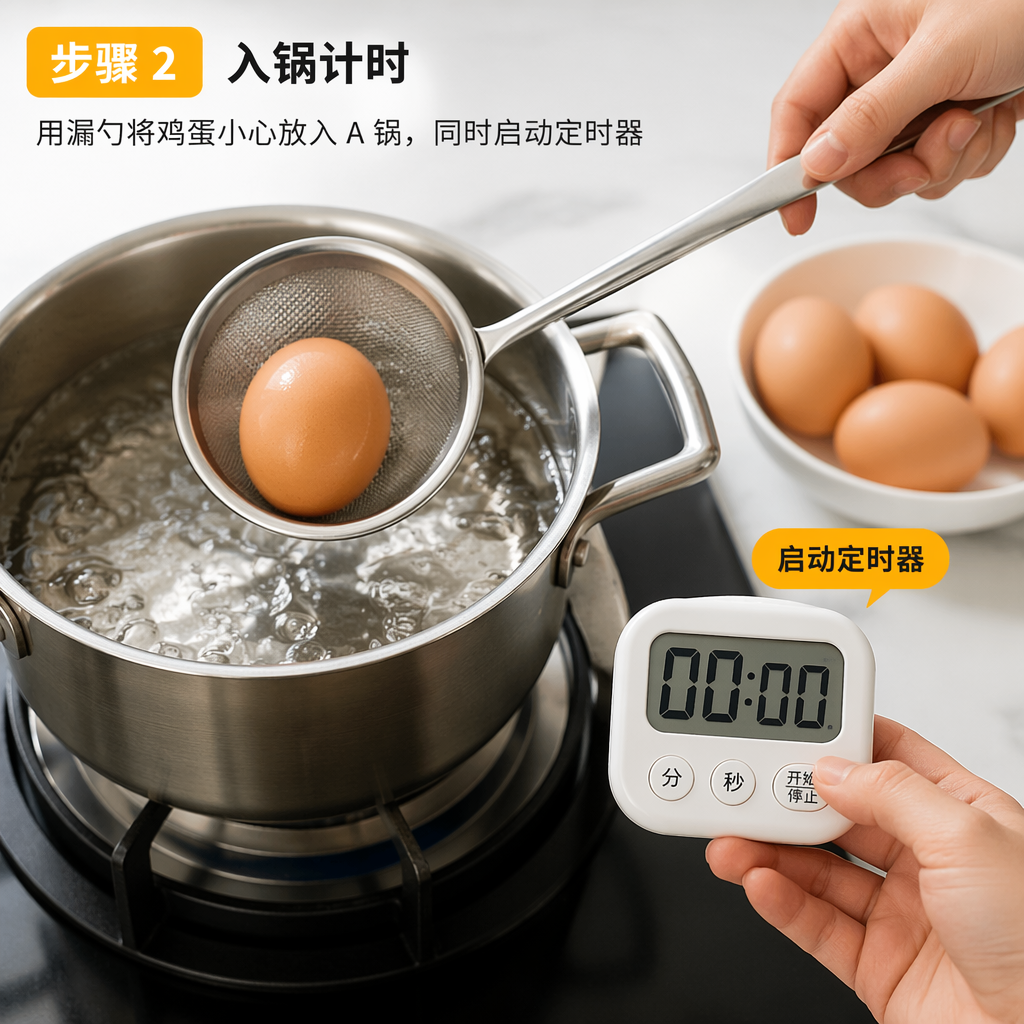
Use a slotted spoon to carefully place the eggs into Pot A, and start the timer at the same time
用漏勺将鸡蛋小心放入 A 锅,同时启动定时器
10 sec
- Move gently to avoid cracking the shells against the bottom of the pot动作需轻柔,避免蛋壳撞击锅底破裂
- 3
Cyclic Transfer
循环转移操作
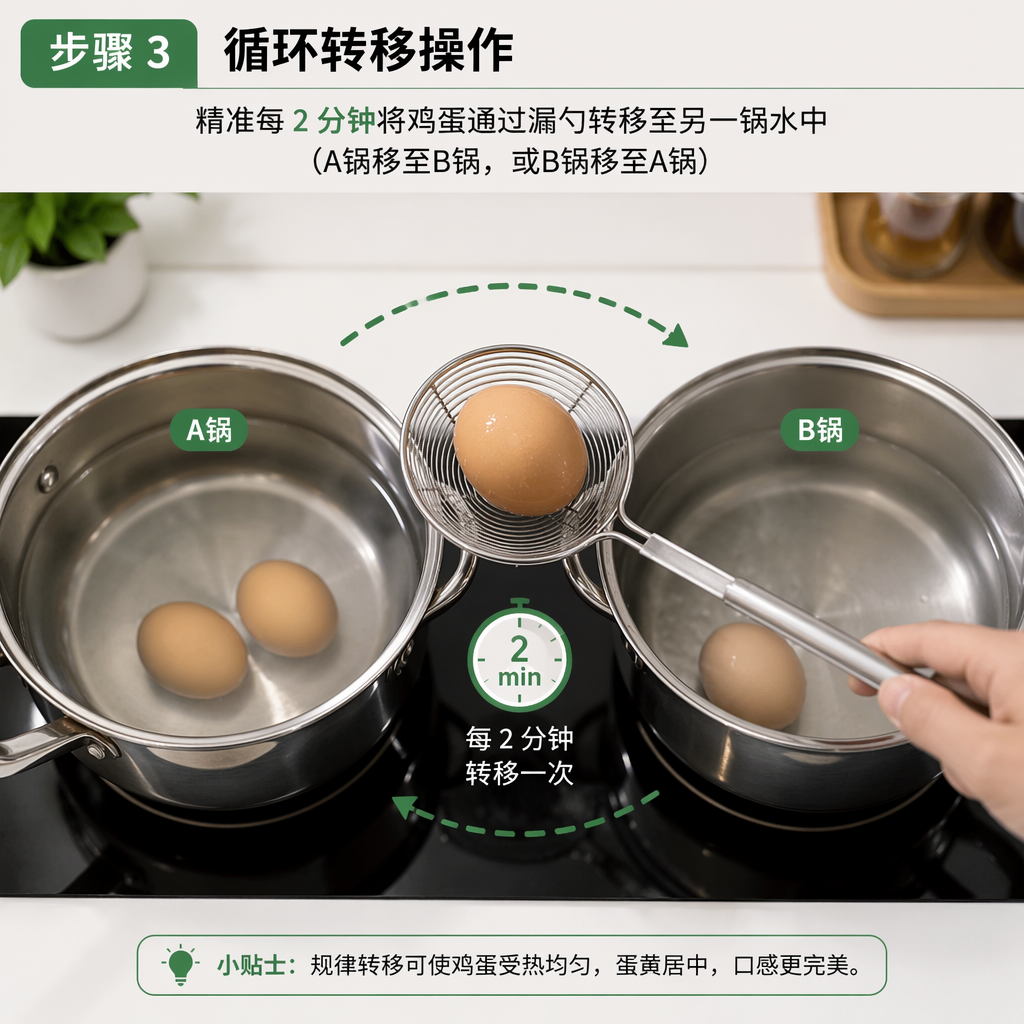
Every 2 minutes, precisely transfer the eggs between the two pots using a slotted spoon (from Pot A to Pot B, or from Pot B to Pot A)
精准每 2 分钟将鸡蛋通过漏勺转移至另一锅水中(A锅移至B锅,或B锅移至A锅)
2 min
- Transfer as quickly as possible to minimize heat loss in the air转移过程应尽可能迅速,减少在空气中的热量损失
- 4
Repeat the Cycle
重复循环
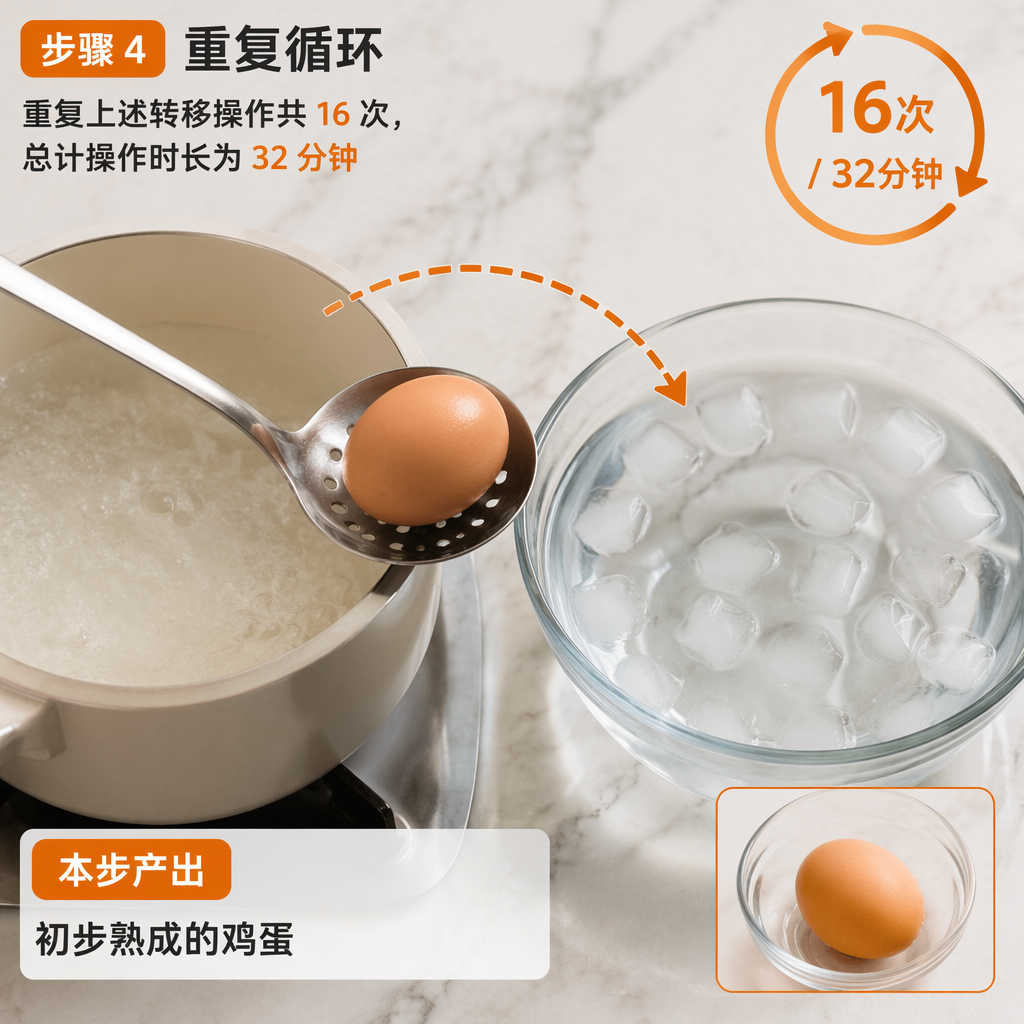
Repeat the transfer operation 16 times in total, for a total duration of 32 minutes
重复上述转移操作共 16 次,总计操作时长为 32 分钟
30 min
- This step is key to achieving layered coagulation of the egg white; timing must be strictly followed此步骤是实现蛋白分层凝固的关键,需严格遵守时间
- 5
Final Rest
末次静置
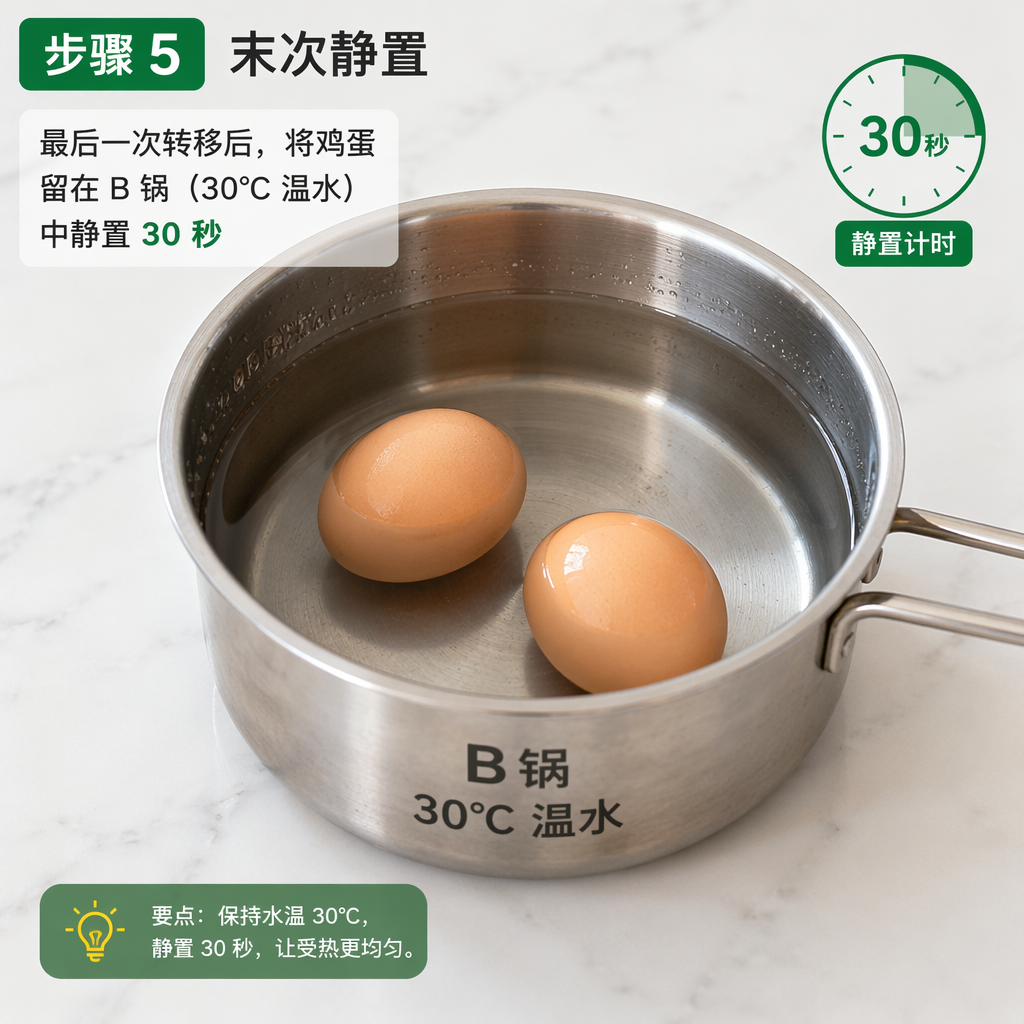
After the final transfer, leave the eggs in Pot B (Warm water (30°C)) for 30 seconds
最后一次转移后,将鸡蛋留在 B 锅(30°C 温水)中静置 30 秒
30 sec
- Ensure the final step transitions smoothly in the low-temperature pot确保最后一步在低温锅中平稳过渡
- 6
Ice Bath to Stop Cooking
冰浴终止加热
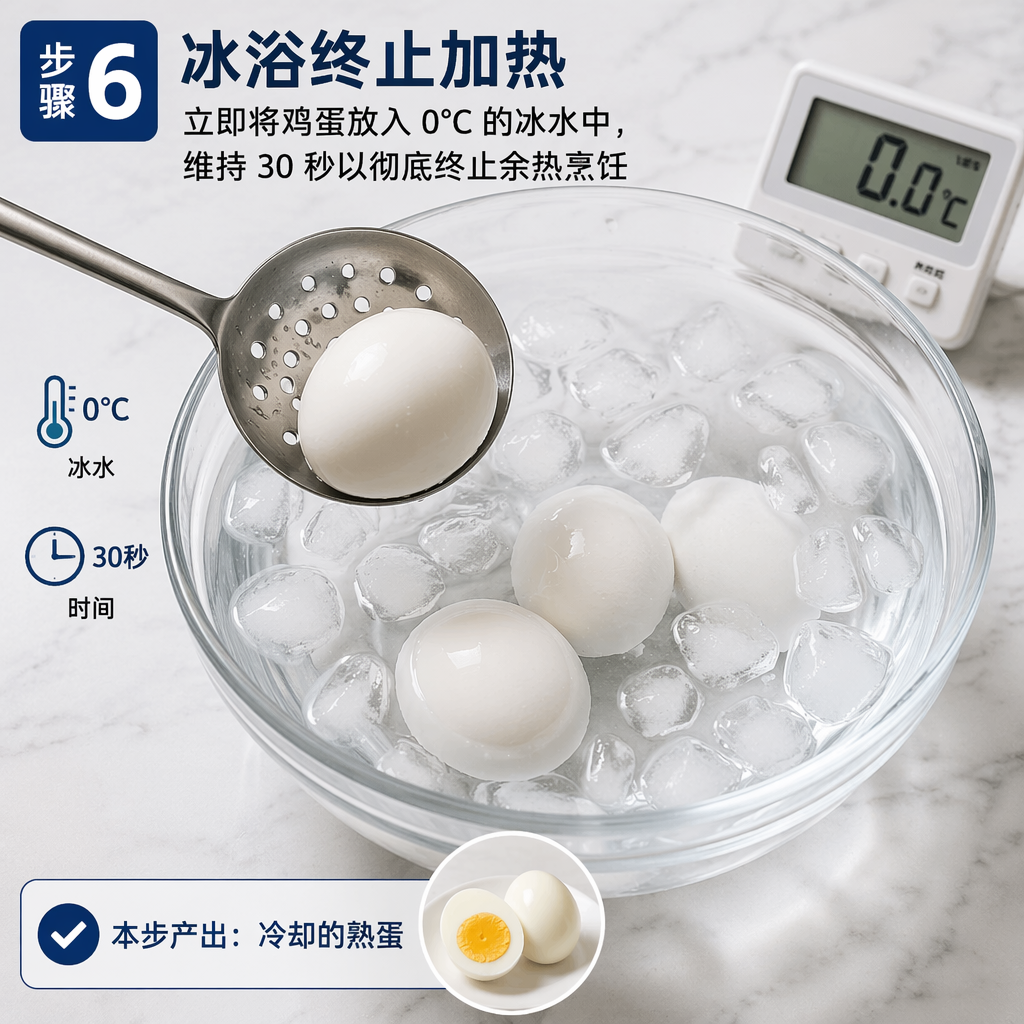
Immediately place the eggs into Ice water at 0°C for 30 seconds to fully stop residual heat cooking
立即将鸡蛋放入 0 摄氏度的冰水中,维持 30 秒以彻底终止余热烹饪
30 sec
- The ice bath causes the egg white to contract quickly, making peeling easier冰浴能让蛋白迅速收缩,更有利于剥壳
- 7
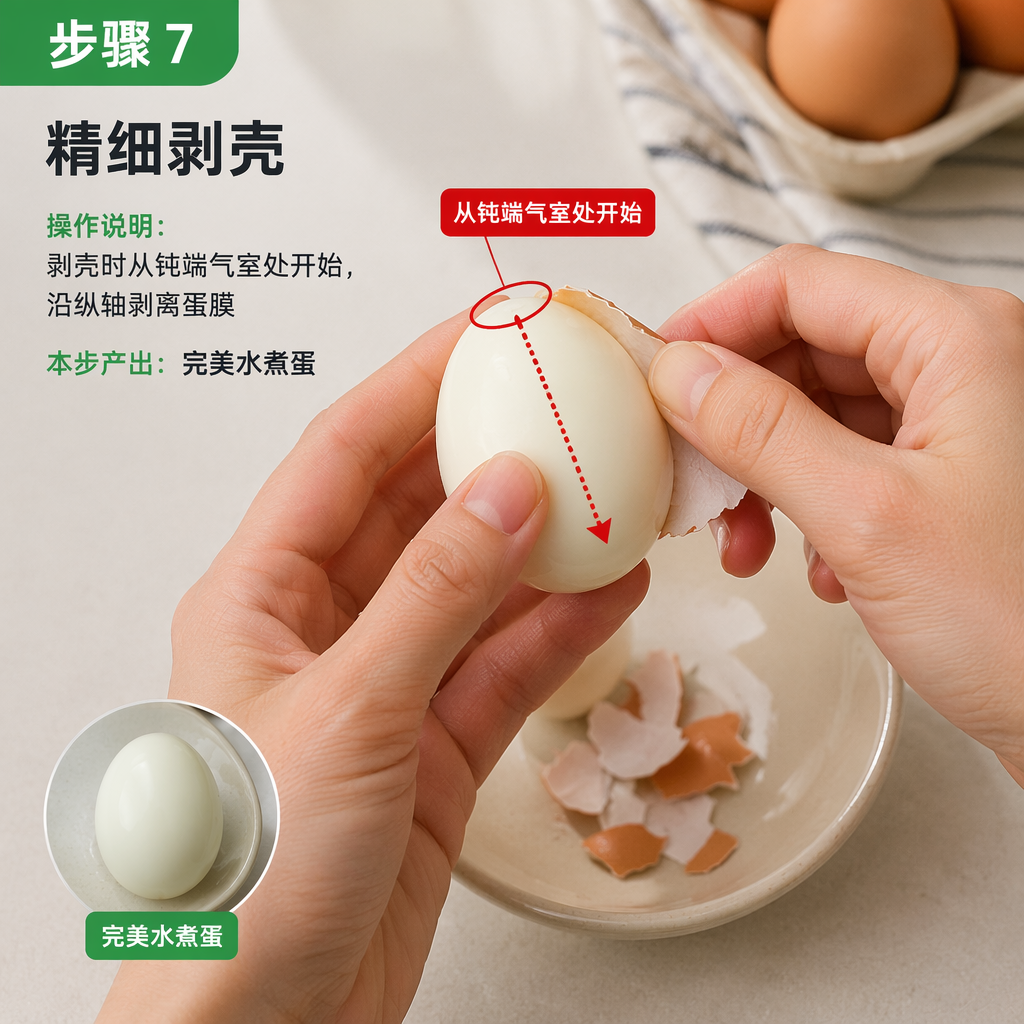
Careful Peeling
精细剥壳
When peeling, start from the blunt end at the air cell and peel the membrane along the longitudinal axis
剥壳时从钝端气室处开始,沿纵轴剥离蛋膜
1 min
- Starting from the air cell best preserves the smoothness of the egg white surface从气室处开始剥离可以最大程度保护蛋白表面的光滑
Extra tips
- Key parameter: The yolk center temperature must be controlled at 67±1°C to achieve a silky texture关键参数:蛋黄中心温度需控制在 67±1°C 以达到绵密口感
- Egg white layered temperature gradient: outer layer 100°C→87°C, middle layer 87°C→55°C, inner layer 55°C→30°C蛋白分层温度梯度:外层 100°C→87°C,中层 87°C→55°C,内层 55°C→30°C
- Nutritional advantage: This scientific boiling method yields 23% higher polyphenol content than traditional boiling营养优势:该科学煮法下的多酚含量比传统煮法高 23%
- This recipe is relatively difficult; you must monitor the timer throughout and execute transfers precisely制作难度较高,需全程关注定时器并精准执行转移操作
More like this
 🥟 Breakfast★★
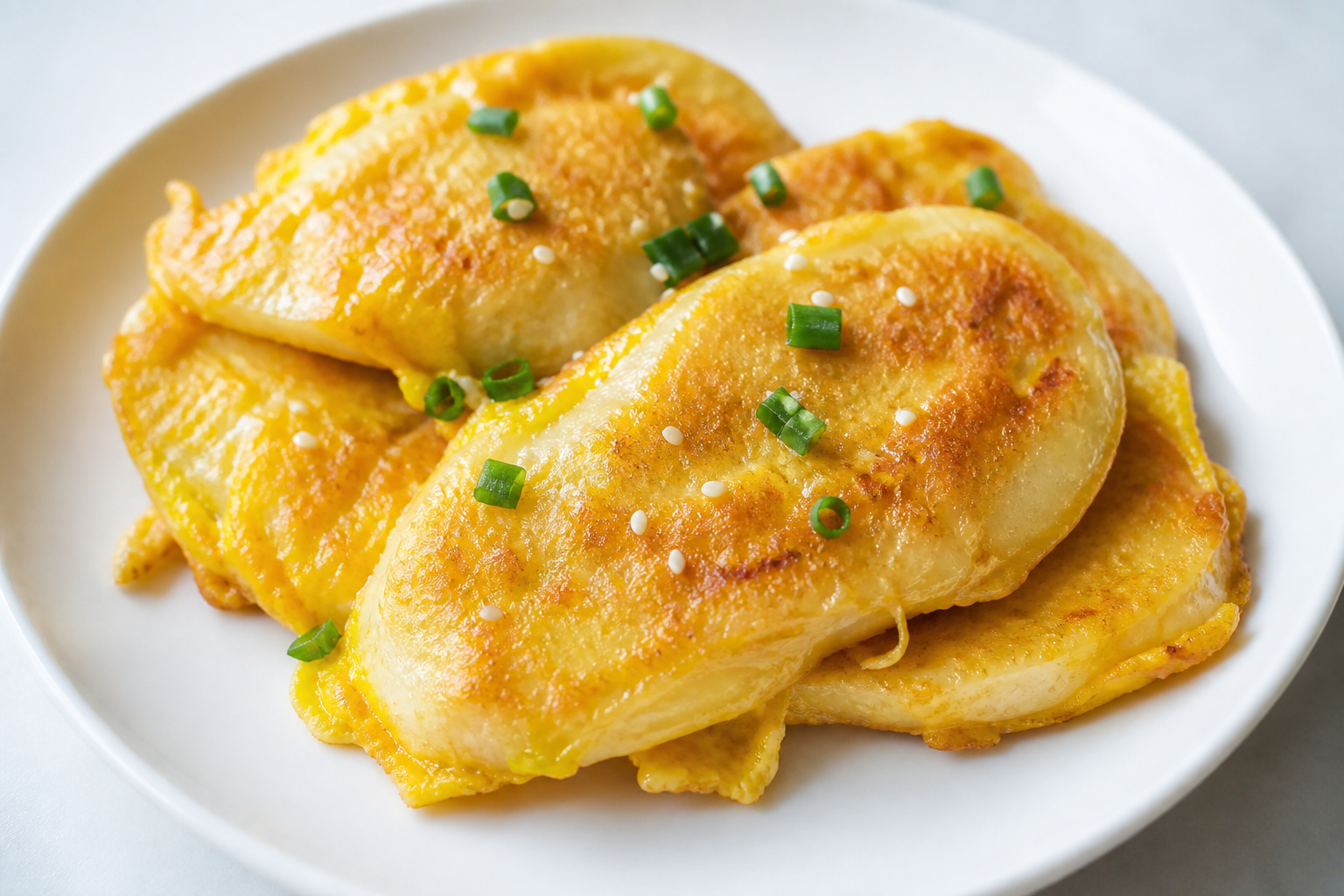
Pan-Fried Glutinous Rice Cake (ci ba) with Egg
蛋煎糍粑dàn jiān cí bā
 🥟 Breakfast★★
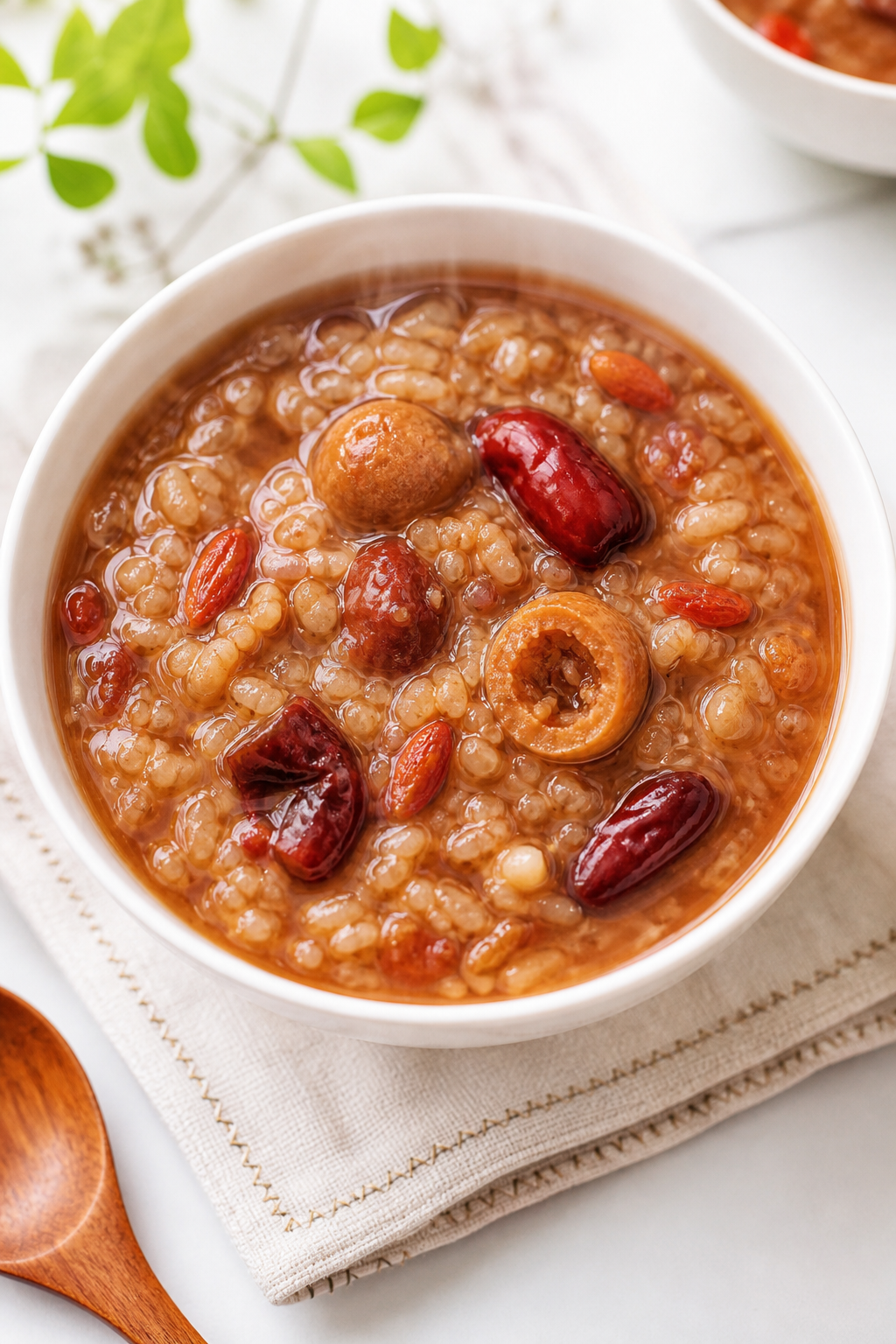
Dried Longan and Red Dates Congee
桂圆红枣粥guì yuán hóng zǎo zhōu
 🥟 Breakfast★★
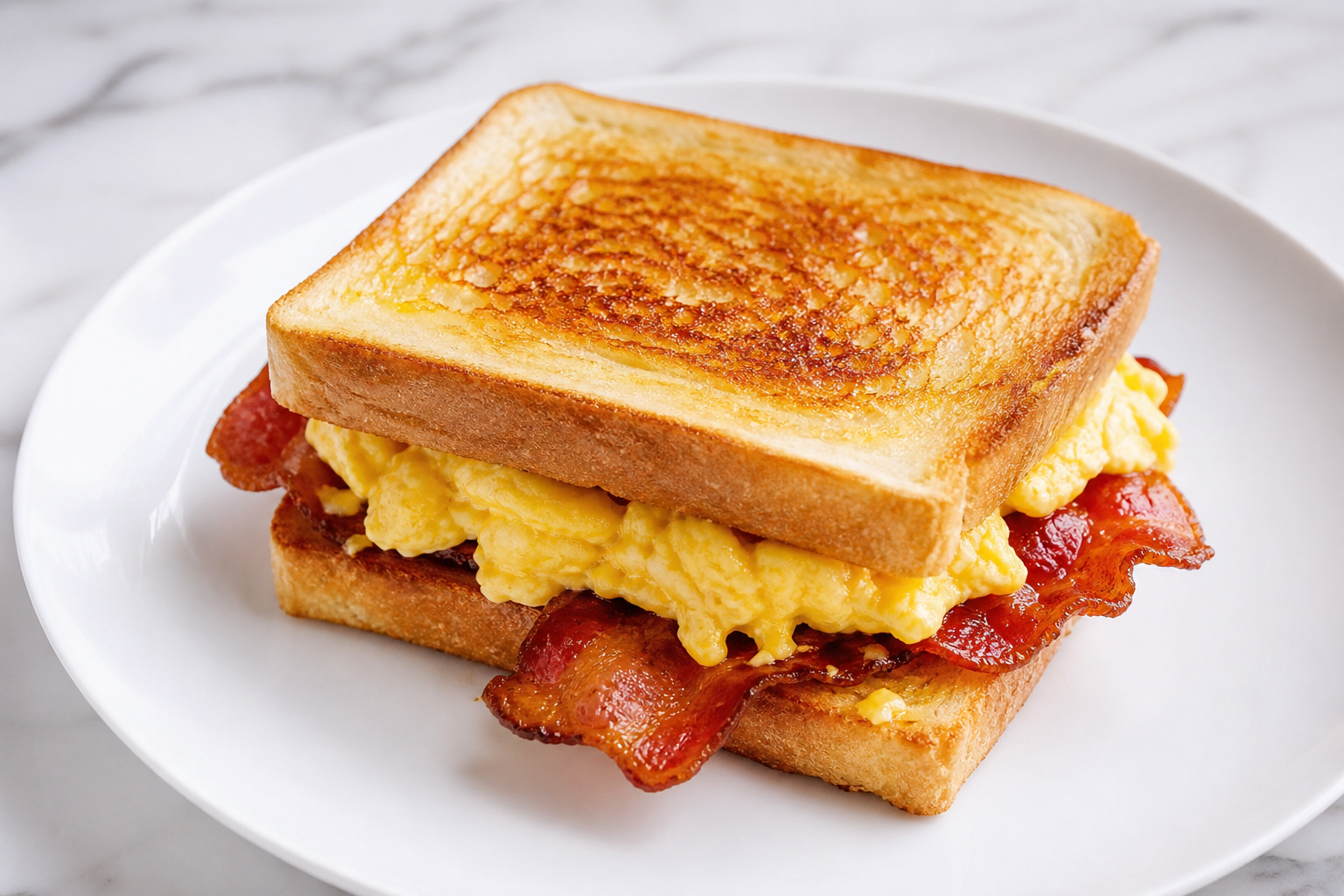
Egg Sandwich
鸡蛋三明治jī dàn sān míng zhì
 🥟 Breakfast★★
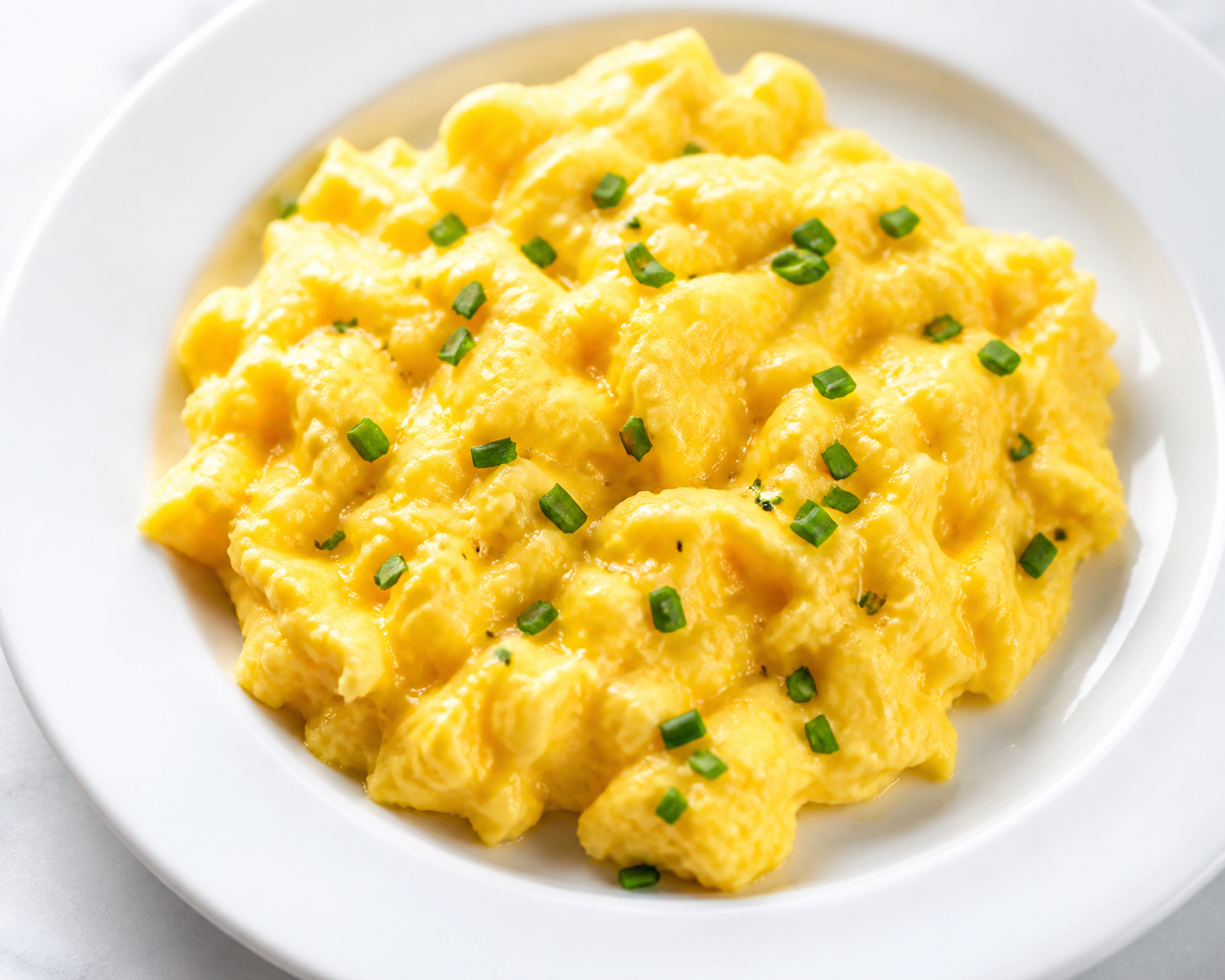
American-Style Scrambled Eggs
美式炒蛋měi shì chǎo dàn